
Free in-home consultation & measurement anywhere in the Santa Fe area Book your free estimate

Energy-efficient windows

Glass and seals chosen for the high desert

Santa Fe's sun is strong, nights get cold, and spring winds carry dust. The right glass and a tight installation make a home more comfortable all year.

Illustration of a picture window with mountain view

Intense sun & UV

At around 7,000 feet there's less atmosphere to filter sunlight, so UV is stronger than at sea level. Low-E coatings block most UV and help reduce fading of floors, rugs, art and furniture. They also reduce unwanted summer heat gain.

Big day-to-night swings

A warm afternoon can turn into a cold night. Insulated glass with low-E coatings and gas fills, set in a well-insulated frame, helps keep that heat inside after the sun goes down.

Wind & dust

Even great glass can't help if air leaks around the frame. Careful shimming, insulation and sealing around each window, plus good weatherstripping on the sash, keep out drafts and fine dust.

Altitude

Sealed insulated glass made at low elevation can be stressed by the lower air pressure here. Glass for high-altitude homes is often built with capillary or breather tubes, or made for the elevation. We account for this when we order. Note that this can affect whether argon gas fill is available, and we'll explain your options.

Reading the label

Most windows carry an NFRC label with independently tested ratings. These are the numbers we'll walk through with you:

U-factorHow well the window keeps heat in. Lower is better for our cold winter nights.
SHGCSolar Heat Gain Coefficient: how much of the sun's heat comes through. Lower blocks more heat; higher lets in more free winter warmth.
Visible TransmittanceHow much daylight comes through. Higher means brighter rooms.
Air LeakageHow much air passes through the window itself. Lower is better for wind and dust.

Not every side of the house is the same

Santa Fe has a long tradition of passive solar design. South-facing glass can collect welcome winter sun, while west-facing windows take the hottest afternoon light in summer.

That's why we may suggest different glass for different sides of your home: for example, glass that lets in more winter sun on the south and more solar control on the west.

Savings vary. How much new windows lower your energy bills depends on your current windows, your home and how you use it. We won't promise a specific number.

Energy-efficient options in every product line

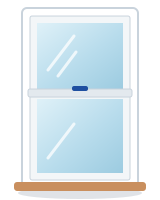
Illustration of a double-hung vinyl window

Vinyl

Low-maintenance, budget-friendly replacement windows

starting at $XXX per window, installed
  • Never needs painting or sealing
  • Multi-chamber frames for good insulating value
  • Low-E, argon and tempered glass options
  • Most styles: double-hung, slider, casement, picture
  • Professional installation & cleanup
  • Manufacturer warranty — terms reviewed at your consultation

Get a Free Estimate
Classic look
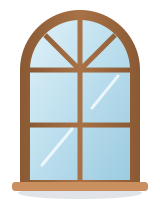
Illustration of an arched wood-clad window

Wood-Clad

Warm wood inside, weather-resistant cladding outside

starting at $X,XXX per window, installed
  • Real wood interior to stain or paint
  • Aluminum or fiberglass cladding outside — little upkeep
  • Traditional profiles suited to Territorial & historic homes
  • Custom sizes, arches and true or simulated divided lites
  • Professional installation & cleanup
  • Manufacturer warranty — terms reviewed at your consultation
Get a Free Estimate

"Starting at" prices are for a standard-size window, installed. Your exact price depends on size, style, glass and the condition of each opening, and is confirmed in a written quote after your free in-home measurement. Financing available with approved credit.

See your options in your own home — free.

We measure every opening, show you real samples, talk through historic-district rules if they apply, and leave you a written quote. No pressure, no obligation.